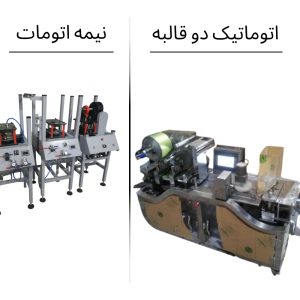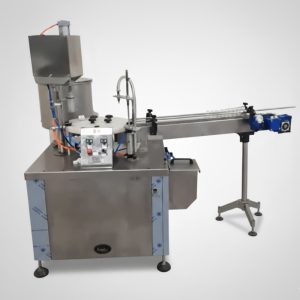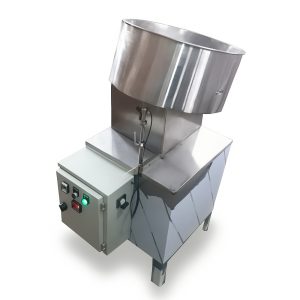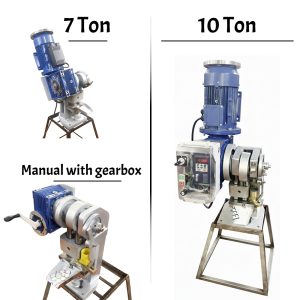
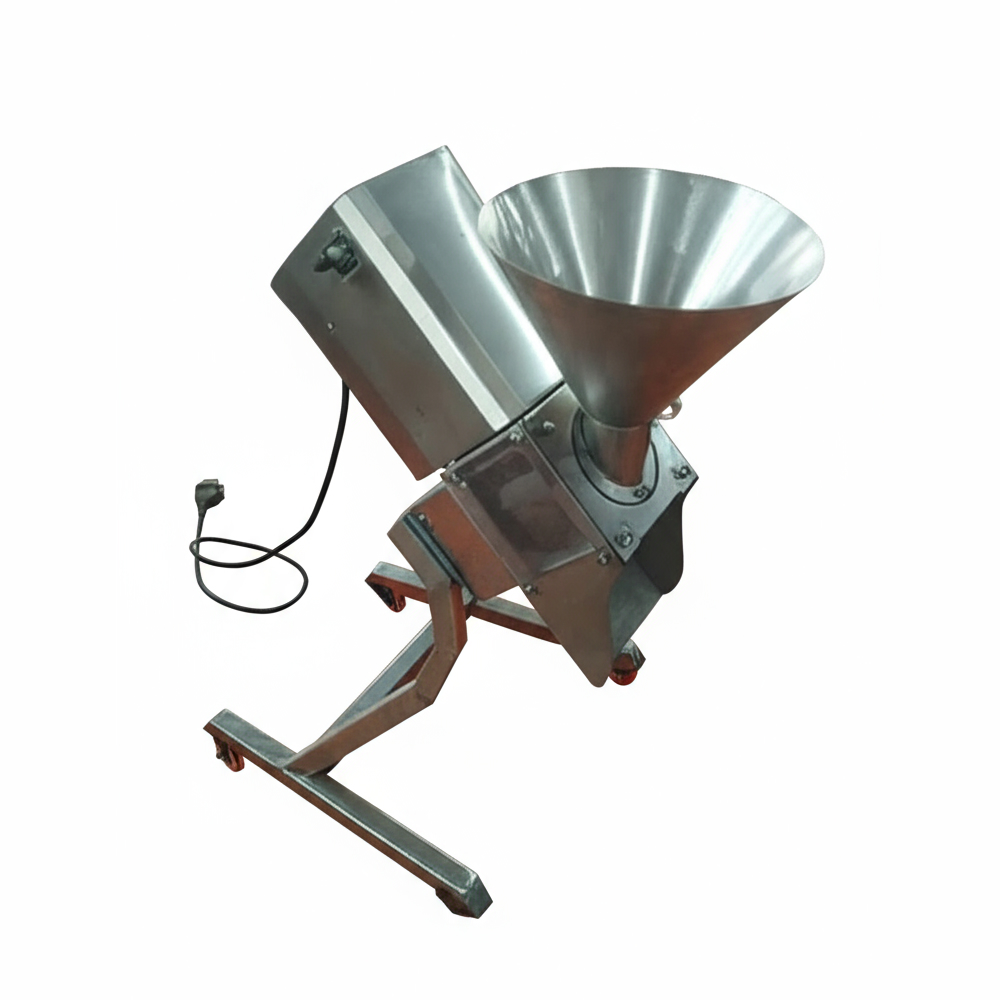
Granulator machine
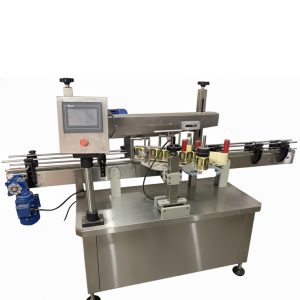
Hassani Machinery’s granulator is a key and vital equipment in the pharmaceutical, food and chemical industries, which aims to convert powdered materials into uniform and homogeneous granules, ensuring the quality of the final product and optimizing subsequent processes such as tablet pressing, coating and blistering. These devices, which are designed in accordance with GMP standards, are available in two main types: dry granulator (suitable for moisture-sensitive materials and increasing production speed) and semi-wet granulator (to achieve better density and higher quality of granules). The structure of these machines is made of 304 or 316 stainless steel (to ensure complete hygiene and corrosion resistance) and, using a replaceable mesh frame, allows for precise adjustment of the desired size of the granules. This device, with the ability to connect to other production line equipment (such as compactors and tablet presses), plays a direct role in increasing the uniformity, compactness and quality of tablets, reducing raw material waste and facilitating final packaging.
Granulator Machine (Granulator)
A granulator machine is one of the most important pieces of equipment in the pharmaceutical, food, and chemical industries. The main task of a granulator machine is to convert powdered or raw materials into uniform and homogeneous granules. This process not only improves the quality of the final product, but also facilitates subsequent production steps such as tablet pressing, packaging (blister), and coating.
Importance of the Granulator Machine in Industry
In the pharmaceutical industry, the production of uniform granules using a granulator machine is essential to achieve high-quality tablets. Granules cause the pharmaceutical ingredients to be better compacted during pressing, ultimately producing resistant and uniform tablets. Also, in the food industry, these devices are used to produce products such as herbal teas, tea bags and various dietary supplements.
Types of Granulator Machines
Generally, granulator machines are designed in two main types, each suitable for specific materials and production conditions:
- Dry Granulator Machine
- Works without the need for liquids or moisture.
- Suitable for materials that are sensitive to moisture.
- Has high speed and shortens the production process.
- Semi-Wet Granulator Machine
- A combination of dry and wet processes.
- Suitable for materials that require better density or specific physical properties.
- Provides higher quality granules and reduces production waste.
Structure and Technical Features of the Granulator Machine
The design and construction of a granulator machine are carried out according to hygienic and industrial standards so that it can be used reliably in sensitive production lines:
- Made of 304 or 316 stainless steel for corrosion resistance and hygiene.
- Equipped with a replaceable mesh frame to adjust the desired size of the granules.
- Ability to connect to other devices such as compactors and tablet presses.
- Possibility of installing intelligent pressure and temperature control systems for more accurate production.
- Design in accordance with GMP standards for the pharmaceutical industry.
The Role of the Granulator Machine in the Tablet Production Cycle
Using a granulator machine in the tablet production cycle improves flowability, compressibility, and uniformity of the final product. The general stages are as follows:
- Tablet formulation → Pharmaceutical raw materials first enter the granulator machine and are converted into uniform granules.
- Tablet pressing → Homogeneous granules produce durable, crack-free tablets with proper compaction.
- Coating → Uniform tablets are easily and evenly coated, which improves the appearance and stability of the product.
- Blister (packaging) → High-quality tablets are placed in durable packaging and are protected against moisture and contamination.
Advantages of Using a Granulator Machine
The use of a granulator machine in pharmaceutical, food, and chemical industries offers several important advantages, which ultimately lead to improved quality and reduced costs:
- Increase the quality of the final product.
- Uniformity in the size and weight of the granules.
- Reduction in waste of raw materials.
- Facilitation of subsequent production steps (pressing, coating, blistering).
- Long-term reduction in production costs.
Challenges of the Granulation Process
Despite all the advantages, the operation of a granulator machine requires precise process control. Otherwise, some challenges may arise during production:
- Uneven size of granules when using non-standard devices.
- Excessive heat generation that can lead to the destruction of active pharmaceutical ingredients.
- The need for precise adjustment of humidity levels in semi-wet models.
The Future of Granulator Machine Technology
With the advancement of modern technologies, granulator machines are moving towards intelligent automation, lower energy consumption, and environmental friendliness. In addition, the use of artificial intelligence-based systems for precise control of the granulation process can significantly increase production efficiency and reduce human error.
Hassani Machinery; A Pioneer in the Production of Granulator Machines
With years of experience in the design and manufacture of pharmaceutical and food machinery, Hassani Machinery produces modern, efficient granulator machines that meet global standards. With advanced engineering design, the ability to connect to tablet production lines, and high-quality raw materials, these machines are a reliable choice for factories and manufacturing companies that are looking for a durable and efficient granulator machine.