
Syrup and liquid production line
Showing the single result
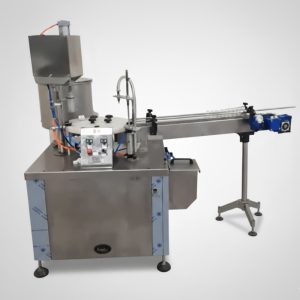
Syrup and Liquid Pharmaceutical Production Line: Precision in Formulation and Uniformity
A syrup and liquid pharmaceutical production line is a set of specialized processes and equipment used for the mass production of liquid oral products such as syrups, suspensions, drops and elixirs. The main focus of these lines is on complete and uniform dissolution of active ingredients, creating physical and chemical stability in the formulation (preventing separation or spoilage) and accurate volumetric filling. The steps include preparation of the base syrup, mixing and homogenization, homogenization (for suspensions), filtration, bottle filling and capping. Precise control of viscosity, pH and concentration at each stage guarantees the final quality of the product.
Syrup and Liquid Pharmaceutical Production Line: From Mixing to Final Packaging
The production line for liquid pharmaceutical products has its own complexities and requires precise control of parameters to ensure uniformity, stability and shelf life of the final product. These lines usually consist of stainless steel tanks, high-speed mixers and pump transfer systems.
The main steps of the syrup and liquid pharmaceutical production line are as follows:
1. Solution Preparation:
This stage begins with the preparation of the base syrup, which usually includes purified water, sucrose (sugar) or its substitutes and stabilizers. The water used is purified water and is poured into large tanks called mixing tanks. The raw materials are added in order and at a specific temperature and completely dissolved under strong stirring to obtain a clear and homogeneous solution.
2. Adding Active Ingredients and Additives:
The active pharmaceutical ingredient (API), flavors, permitted colors, preservatives, and other additives are added to the tank. To ensure complete dissolution, the mixture is subjected to gentle heating and continuous stirring. In the case of suspensions (solid particles suspended in a liquid), this step is very critical and the mixture must be fed into a homogenizer or colloid mill to grind the particles to a uniform and fine size and prevent them from settling.
3. Filtration and deaeration of the mixture:
The prepared solution or suspension is passed through suitable filters (such as cartridge filters) to remove any undissolved solid particles or air bubbles. This step helps in achieving the desired clarity and appearance of the product.
4. Filling & Capping:
The final liquid is transferred to a volumetric filler. These machines (often piston or prismatic) fill washed glass or plastic bottles in a fully automatic and high-precision manner. Immediately after filling, the bottles are taken to the capping machine and their lids are closed with plastic or metal caps (often with an internal seal) to prevent leakage and contamination.
5. Labeling and final packaging:
Finally, the bottles enter the labeler to be labeled with the pharmaceutical information. After final inspection, the finished product is packed in cartons or syrup containers and ready for distribution.
Quality control throughout all these stages, especially pH, specific gravity, viscosity and content uniformity tests, is essential to ensure product quality.