
Granulators and mixers
Showing all 2 resultsSorted by latest
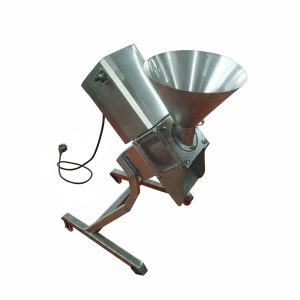
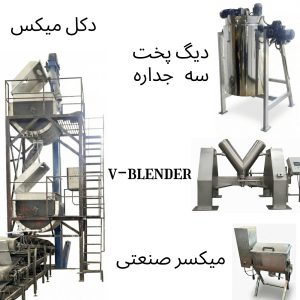
Granulator and Mixer: The Heart of the Tablet Production Line
Granulator and mixer are two essential and vital equipment in the pharmaceutical, food and chemical industries that play a key role in producing a uniform and high-quality product. The mixer is responsible for the homogeneous and complete mixing of dry powders (including the active ingredient and excipients) to obtain a completely uniform mixture. The granulator then converts this powder mixture into fine and uniform granules (granules). This process (granulation) improves the flowability of the powder, increases its compressibility in the tablet press and prevents the separation of the mixed components. Without these two devices, mass production of tablets with accurate dosage and consistent quality would be impossible.
Granulators and Mixers: Engineering Uniformity and Quality in the Production Line
In modern production lines, mixers and granulators often operate as an interconnected system to transform raw materials from raw powder to granules ready for pressing.
1. Mixer: Creating Absolute Uniformity
The mixer is the first station in the process. Its task is to mix the raw materials, including the active pharmaceutical ingredient (API) and inactive ingredients (excipients) such as fillers, lubricants and disintegrants. Common types of industrial mixers include ribbon mixers, V-Cone mixers and bin blenders. The choice of mixer type depends on various factors such as production volume, powder characteristics (such as density and particle size), and process sensitivity. The output of a good mixer is a completely homogeneous mixture in which each small sample contains the same percentage of all the ingredients.
2. Granulator: Converting powder into uniform granules
The powder mixture leaving the mixer is often not suitable for compression in a tablet press. Fine particles have poor flowability and may become locked in the press hopper or produce weak, cracked tablets during compression. The important role of the granulator is highlighted here.
High-Shear Granulator: This is the most common type. In this machine, a liquid binder solution is added to the powder mixture in a stirred tank. High-speed, rotating agitators crush the moistened particles together, forming larger, granular particles (granules).
Roller Compactor: In this method, the powder is compressed under pressure between two rollers into a hard, dense strip or sheet, which is then crushed, crushed, and sieved to form granules. This method is ideal for moisture-sensitive materials.
The output of this process is granules of uniform size, shape, and density that flow easily and produce tablets of uniform weight, strength, and drug content in the tablet press.
As a result, these two machines together form the basis for producing a standardized, high-quality, and reliable product.